
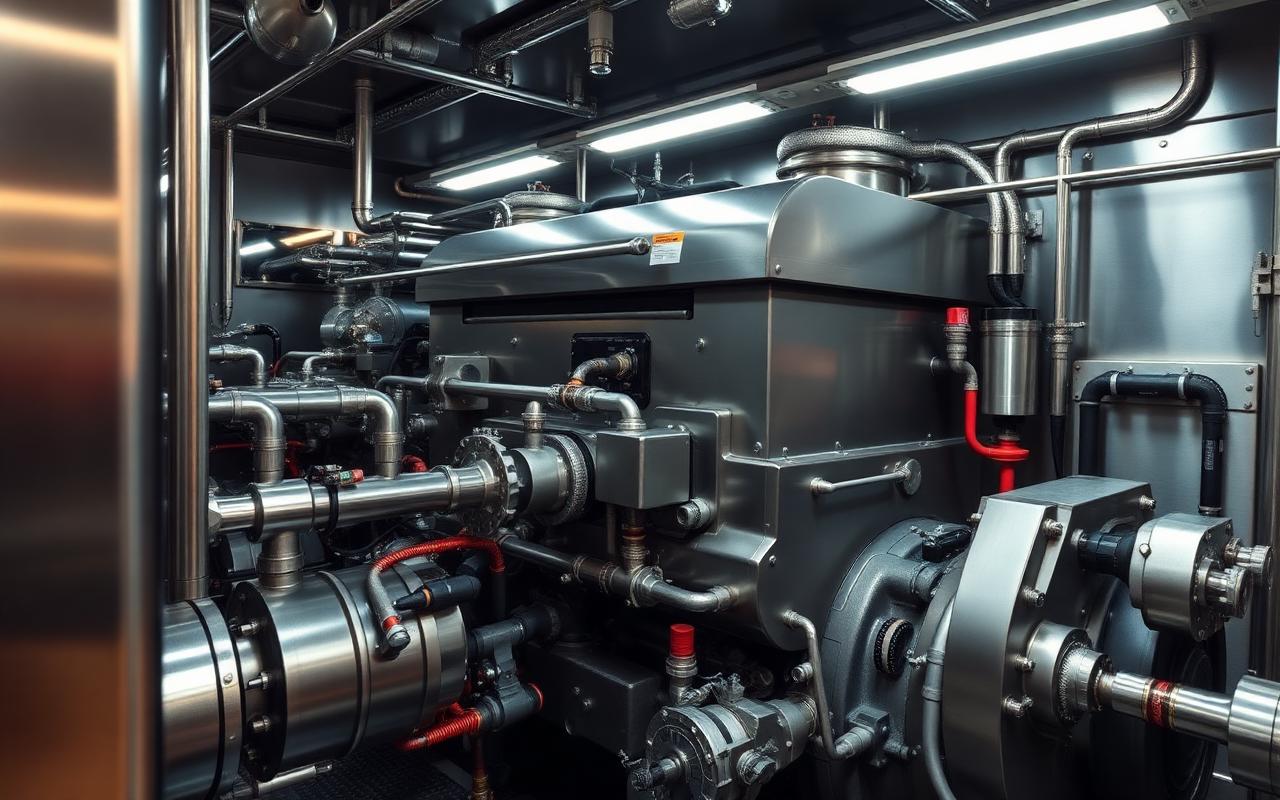
Hydrogen combustion enhancement for commercial fishing vessels.
A fishing vessel runs extended continuous offshore duty, cycles between steaming, trawling and hauling load, and carries refrigeration and ship's service auxiliaries that never stop. It is also days from a workshop, which makes engine reliability a safety question and not only a cost one. HydroHub PEM units fit as a reversible, bolt-on retrofit with nothing stored aboard and no dependency created — isolate it and the engine runs as standard.
Can hydrogen combustion enhancement be fitted to a commercial fishing vessel?
Yes. A PEM unit generates hydrogen and oxygen on demand from deionised water and feeds it into the engine's intake path, so it fits a fishing vessel as a bolt-on, fully reversible retrofit with no ECU calibration change, no fuel-system modification and no gas stored aboard. The HydroHub DH-Power covers 7.0 to 16.0 litre engines for trawler and longliner mains; the HydroHub H-Power covers up to 7.0 litres for inshore vessels, refrigeration drives and ship's service sets. Because trips vary, measure fuel per engine hour at a stated load reference across several comparable trips rather than trip to trip.
- Trawler and longliner mains: HydroHub™ DH-Power (7.0–16.0 L)
- Inshore vessels, reefer drives and ship's service sets: HydroHub™ H-Power
- Extended continuous offshore duty; mains above 16.0 L quoted per application
- No gas stored aboard — generated on demand, consumed immediately
- Fully reversible; isolate the unit and the engine runs as standard on diesel
- Sealed vibration-isolated cabinet, no open electrolyte bath
- Primary unit
- HydroHub™ DH-Power
- Auxiliaries / inshore
- HydroHub™ H-Power
- Gas storage
- None — on demand
- Consumable
- Resin filter 6–9 mo
The evidence and sector pages this vertical builds on.
Marine →
The shared vessel and auxiliary-engine detail — mains, ship's service gensets, mounting and no gas stored aboard — set out in full.
Remote fuel logistics cost →
Why delivered fuel cost at a regional port, not metropolitan pump price, is the number to model against.
Idle & part-load duty cycles →
Applies to refrigeration and ship's service sets running long hours at part load.
Unit selection by equipment class.
| Equipment class | Typical displacement | Recommended unit | Notes |
|---|---|---|---|
| Offshore trawler main engine | 9 – 16 L | HydroHub™ DH-Power | Record the load reference: steaming, trawling or hauling. Compare per hour, not per trip. |
| Longliner / netter main engine | 7 – 13 L | HydroHub™ DH-Power | Long steaming legs plus set-and-haul cycles; log both separately. |
| Inshore & day-boat main engine | 3.0 – 7.0 L | HydroHub™ H-Power | Shorter trips; accumulate several comparable trips before drawing conclusions. |
| Refrigeration / RSW drive | 2.5 – 9 L | H-Power or D-900 | Near-continuous duty on trip; one of the cleanest engines to measure aboard. |
| Ship's service gensets | 2.5 – 12 L | H-Power or D-900 | Continuous duty; fed from the set's starting battery or DC bus. |
| Tender & workboat engines | 1.8 – 4.5 L | HydroHub™ A-675 / A-900 | Compact cabinet; same pattern as light commercial fitment. |
PEM units suited to this duty.
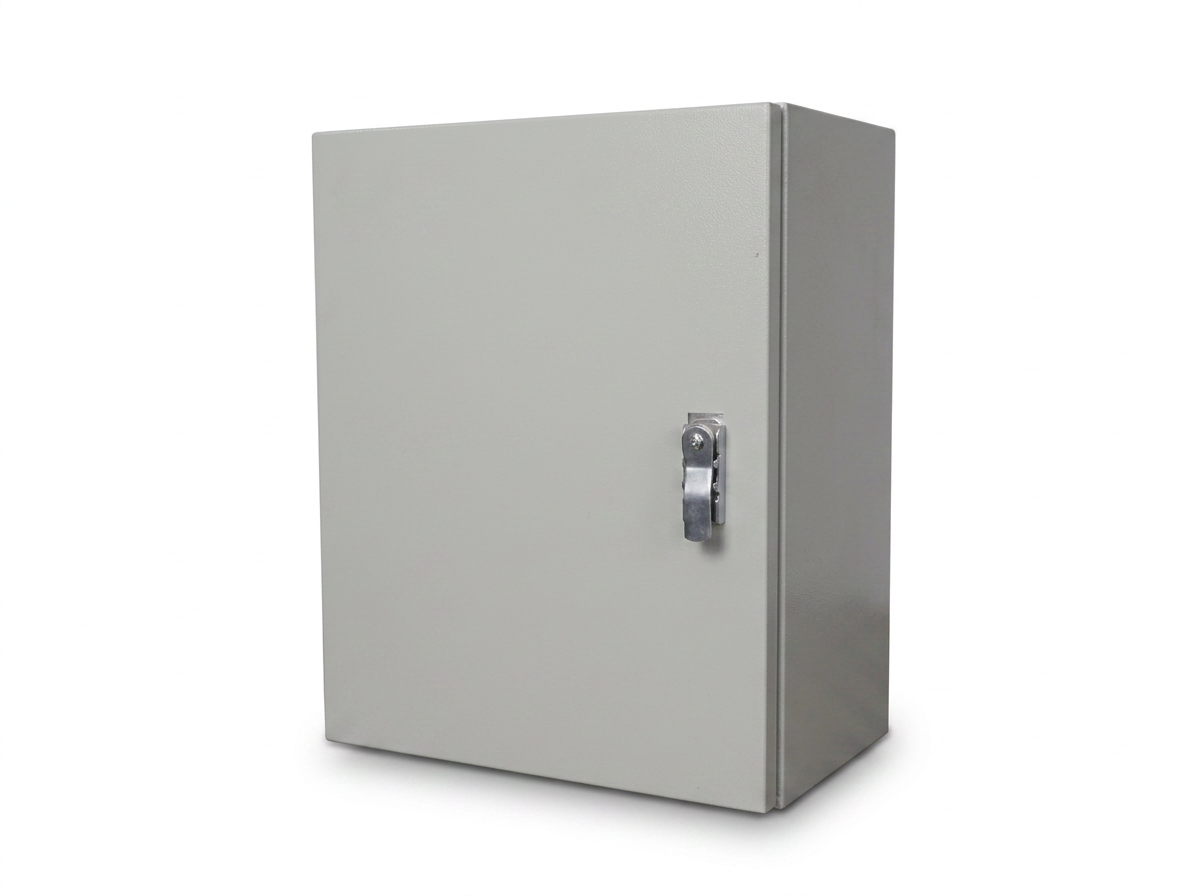
HydroHub™ DH-Power Heavy-Duty PEM Enhancement System
- Application
- Up to 16.0 L
- Output
- 900 ml/min max
- Voltage
- 12 / 24 V DC
- Power
- 160 W
Free worldwide delivery, DDP
Duties & taxes are included on most destinations. Select your country for the exact arrangement.
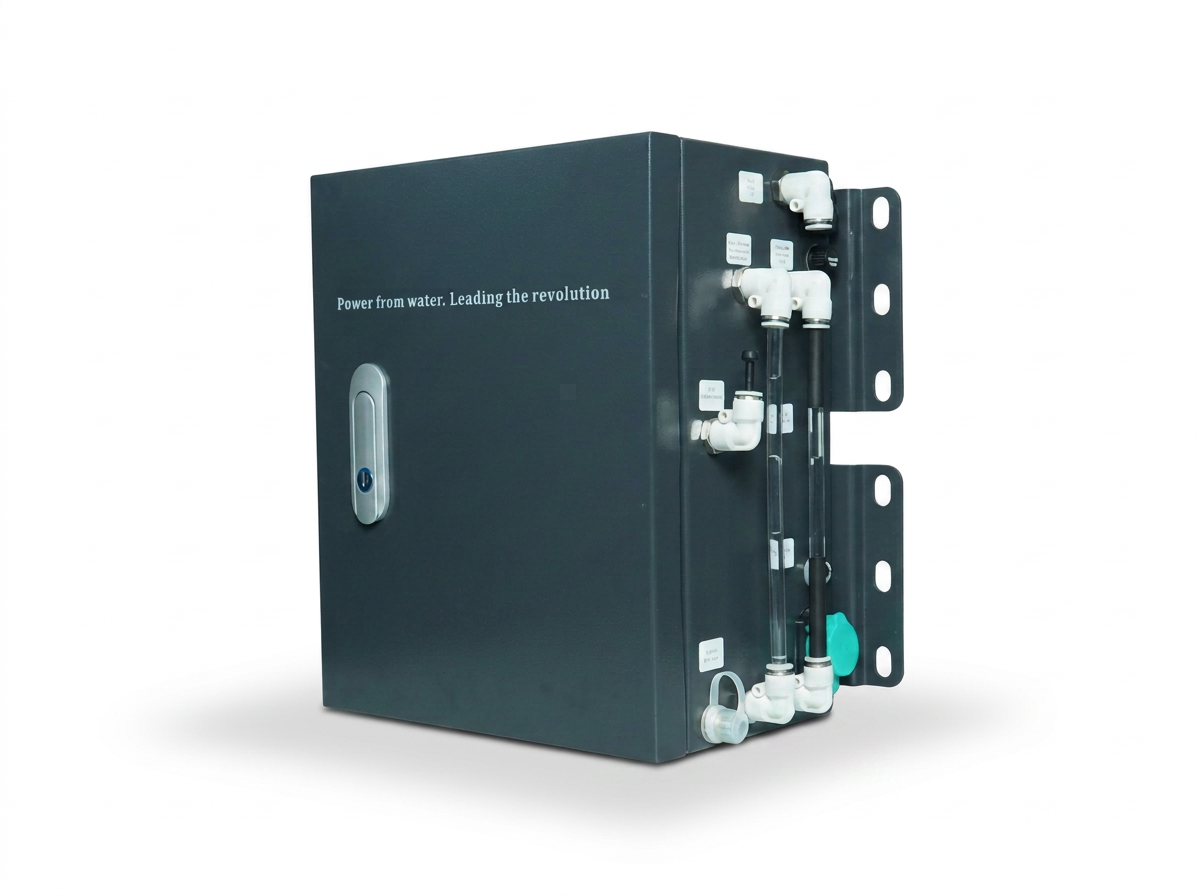
HydroHub™ H-Power Heavy-Duty PEM Enhancement System
- Application
- Up to 7.0 L
- Output
- 900 ml/min
- Voltage
- 12 / 24 V DC
- Power
- 160 W
Free worldwide delivery, DDP
Duties & taxes are included on most destinations. Select your country for the exact arrangement.
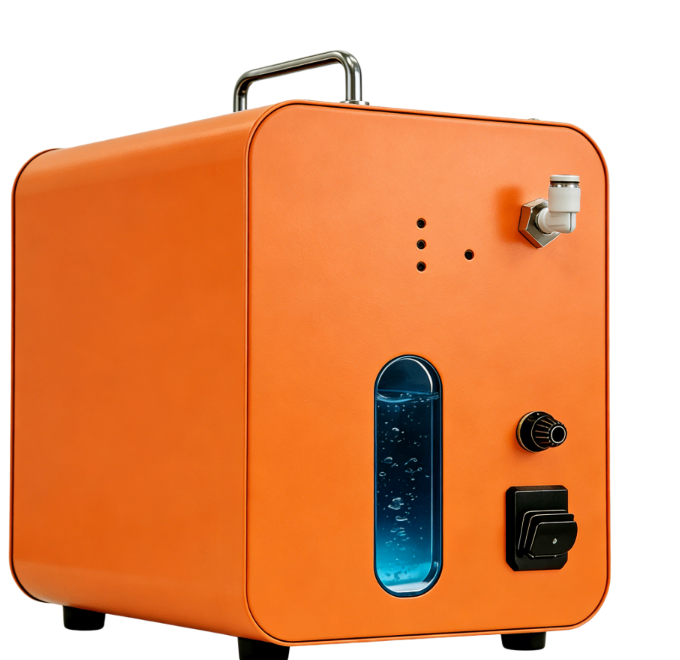
HydroHub™ A-900 PEM Engine Enhancement System
- Application
- 2.7 – 7.0 L
- Output
- 900 ml/min
- Voltage
- 12 – 24 V DC
- Power
- 170 W
Free worldwide delivery, DDP
Duties & taxes are included on most destinations. Select your country for the exact arrangement.
What this environment does to the hardware.
Days from a workshop
Anything fitted to a vessel has to fail safe. This retrofit creates no dependency: isolate or remove it and the engine runs as standard on diesel alone, with no ECU or fuel-system change to unwind at sea.
Extended continuous duty
Mains, refrigeration drives and ship's service sets run for days at a time. Continuous-duty operation is the specified condition, not an exception to it.
Load reference matters more than hours
Steaming, trawling and hauling are different loads. A comparison is only meaningful if the load reference is recorded and matched between the baseline and fitted periods.
Salt air and vessel motion
The cabinet is sealed and vibration-isolated, and PEM cells run deionised water through a solid membrane, so there is no open electrolyte to slosh. Corrosion management follows your existing engine-space regime.
Nothing stored aboard
Gas is produced on demand and consumed immediately, which avoids cylinder stowage, placarding and survey questions associated with stored gas.
Stores and consumables
Deionised water and a resin filter every 6–9 months. Both are stores items in the same handling class as coolant, held aboard or at the home port.
Recommended trial sequence.
- 01Pick one vessel and identify each engine to be measured: main, reefer drive, ship's service set
- 02Log fuel per engine hour with the load reference recorded across several trips as a baseline
- 03Fit one unit and record the installation against the vessel and engine number
- 04Repeat over the same number of comparable trips and the same load references
- 05Compare per hour at matched load reference — never trip to trip
- 06Only extend to further vessels once the measured result meets your threshold
Model your own numbers.
Enter your fuel burn, hours and the reduction you want to model. Scenario only — not a savings prediction.
Fuel Cost Scenario Calculator
Scenario modelling, not a savings prediction. You choose the assumed reduction — we never suggest a figure is typical or expected.
Remote diesel costs what it cost to deliver, not bowser price. Landed cost vs pump price →
Scenario modelling — pick a reduction to evaluate. Not a prediction.
Recommended: D-900 for this application. Payback is calculated against vehicles × system delivered price.
Results are illustrative only. Actual performance depends on engine condition, duty cycle, fuel quality, installation and operating conditions.
Field evaluation is required before any commercial decision. Fleet Trial Programme →
How we report performance.
No projected, typical or expected fuel-saving figure is published. Actual results vary materially with engine condition, duty cycle, load profile, fuel quality, installation and operating conditions. A controlled field evaluation on your own equipment, with baseline data captured before installation, is required before any commercial projection.
These are combustion-enhancement devices. No emissions-compliance or fuel-saving guarantee is expressed or implied. Professional installation and controlled field evaluation are recommended.
Free worldwide delivery. Duties & taxes included on most destinations; where pre-payment isn't permitted, the carrier collects them on arrival. 12-month manufacturer warranty. See Shipping & duties by country for the exact arrangement for your destination.
- · Remote-site fuel logistics cost — landed cost versus pump price, and why the same honest percentage moves more money.
- · Idle & part-load duty cycles — where the published literature reports the most room, and where it reports least.
- · Hydrogen with biodiesel blends — per-study findings on blended fuels, with the NOx trade-off disclosed.
- · Visible smoke reduction — smoke opacity findings per study.
Questions.
How is commercial fishing different from general marine work?
- Two things: duty cycle and consequence. A fishing vessel may run days or weeks offshore with the main engine and auxiliaries under continuous or repeated heavy load, and it is a long way from a workshop. On a charter boat or harbour workboat, a fault is an inconvenience; on a trip offshore, engine performance is a safety matter as much as a cost one. The underlying vessel and auxiliary-engine detail is shared with our marine page, and we do not repeat it — this page is about the fishing fleet's operating conditions and risk profile.
Which HydroHub unit suits a fishing vessel?
- Displacement decides it. The HydroHub DH-Power covers 7.0 to 16.0 litre engines, which covers most trawler and longliner mains and larger auxiliaries. The HydroHub H-Power covers up to 7.0 litres for smaller inshore vessels, refrigeration drives and ship's service sets. Mains above 16 litres are handled as multi-unit installations quoted per application.
What happens if the unit faults at sea?
- It is designed as a bolt-on, fully reversible retrofit that feeds the intake path only. If the unit is isolated or fails, the engine reverts to standard operation on diesel alone — there is no dependency created and no modification to the fuel system or ECU to unwind. Skippers can also isolate it deliberately and continue the trip.
Is any hydrogen stored aboard?
- No. Gas is generated on demand from deionised water and consumed immediately in the intake path. There is no cylinder, no accumulator and no stored gas inventory aboard the vessel.
How do you deal with salt air and vibration?
- The cabinet is a sealed industrial enclosure, vibration-isolated and mounted clear of exhaust and turbo heat in the engine space. PEM cells run deionised water through a solid membrane, so there is no open electrolyte bath to slosh with vessel motion. Salt-air corrosion management follows the same regime you already apply to engine-space equipment.
How should a skipper measure it honestly on a trip?
- Trips vary too much for a single-trip comparison to mean anything. Log fuel per engine hour with the load reference recorded — steaming versus trawling versus hauling — across several trips before fitment, then repeat across the same number of comparable trips afterwards. Fuel per hour at a stated load reference is the comparison that holds up; fuel per trip is not.
Continue reading.
Hydrogen combustion enhancement
What it is, how PEM gas reaches the cylinder, and what it does not do.
Engine performance improvement
Flame speed, burn completeness and load response on diesel engines.
Fuel efficiency
How to baseline and measure litres per 100 km or litres per hour.
Emissions reduction
Soot, particulate and unburnt-fuel behaviour, and how to test it.
Visible smoke reduction
Smoke opacity findings per study, with the NOx trade-off disclosed.
Remote-site fuel logistics cost
Landed cost versus pump price, and why the same percentage moves more money.
Generator-set classes
Camp, prime, standby, rental, telecom, irrigation and ship's service sets compared.
Idle & part-load duty cycles
Reefers, camp gensets and high-idle plant — where the literature reports most room.
Hydrogen with biodiesel blends
Per-study findings for hydrogen enrichment on biodiesel, NOx disclosed.
Installation guide
Nine-step fitting sequence: mounting, wiring, gas line, commissioning.
Safety & compliance
On-demand gas, no storage, alarms, shutdowns and reversibility.
Troubleshooting
Alarms, low gas output, water quality and no-start diagnostics.
Case studies & field results
Published operator data and trial methodology.
Compare PEM systems
A-450 to DH-Power side by side: displacement, output, current draw.
Does it actually work? Evidence review
The published literature, the FTC/EPA history and the ACL context.
How it works
Gas path and established physics, explained with diagrams.
PEM vs alkaline
Membrane on water versus caustic KOH: servicing, purity, cost.
Sizing combined gas
Why PEM and alkaline gas-volume benchmarks are not interchangeable for ICE sizing.
Four hydrogen technologies
Enhancement vs H2ICE vs fuel cell vs chemical generation.
Compared with Hydrogen Fuel Systems
Honest comparison with the Perth-based Gen alkaline range.
Compared with H2i Technology
Hardware, pricing and evidence transparency versus the Victorian supplier.
Compared with dynaCERT HydraGEN
PEM versus alkaline, published price versus dealer quote, Verra versus ACCU.
Compared with HYDI
The South Australian manufacturer: UniSA testing, field history and quote path.
AU installation, warranty & safety
VSB 14 and VSB 6, ACL guarantees and documentation to keep.
Mining fleets
Haul trucks, dozers, drill rigs and site gensets: unit selection and dust.
Marine
Workboats, charter, fishing and ship's service gensets — no gas stored aboard.
Agriculture
Tractors, headers, pump sets and farm trucks across seasonal duty.
FAQ
Answers on fitment, water, warranty, freight and duty cycles.